Showing posts with label rhino records. Show all posts

A Cappella Review

A Cappella
Average Reviews:

(More customer reviews)
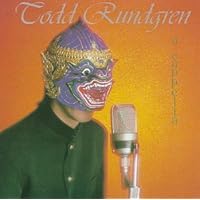
... Rundgren album. This album was the first I ever bought, and it contains some of the most engaging pop music ever to grace an aluminum polycarbonate sandwich. It's all composed of sounds made by Todd's voice (and other self-made sounds, such as handclaps). Some sounds have been heavily processed and you'll find it virtually impossible to believe that they started out as vocal sounds (although Rundgren's soulful voice, one of the best in rock, also makes plenty of appearances under its own recognizance, most notably on "Honest Work"). Never has one man's mastery of the studio as an instrument been so evident. I only give it 4 stars because Rundgren displays a regrettable tendency to repeat his choruses a bit too long before finally fading out. Still one of the best.

Click Here to see more reviews about: A Cappella


Buy Now

Click here for more information about A Cappella

Calling All Stations (W/Dvd) Review

Calling All Stations (W/Dvd)
Average Reviews:

(More customer reviews)
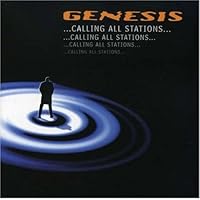
I liked this album when it was originally released. It was dark and moody but sounded fresh and Ray Wilson has a great voice to fit the band. I was pumped to see all the remasters for Genesis but upon a closer look the band really disses this re-release. There were so many extra songs recorded that were used as b-sides to the singles released (i.e Congo, Shipwrecked, etc.) why not include them on this release as a 2nd cd? Also the live footage is great but c'mon! only 3 songs!!, the band had a complete show filmed in Poland waiting to be released if the album was a huge success, but as you can guess it wasn't. Oh well, I really felt the band purposely overlooked this album when it came time to remaster...they could have included all the Wilson era songs plus the concert into a nice comprehensive package that the diehard Genesis fans have wanted of this album.

Click Here to see more reviews about: Calling All Stations (W/Dvd)


Buy Now

Click here for more information about Calling All Stations (W/Dvd)

American Soldier Review

American Soldier
Average Reviews:

(More customer reviews)
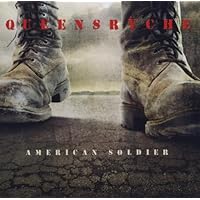
Queensrÿche has had quite a roller coaster ride over the past decade. From 1999-2009, the band featured three different sets of songwriters before settling in with producer/songwriter Jason Slater in 2006 for Operation: Mindcrime II. With Slater back for round two with lead singer Geoff Tate and company, Queensrÿche has clearly found its creative legs on American Soldier, a concept record detailing the experiences of United States servicemen and women.
Starting with the "on your feet!" call of a boot camp drill instructor in "Sliver," American Soldier takes the listener on a unique journey of hard rock bombardment. Featuring a plethora of heavy riffing throughout the album, particularly on the rockers "Man Down!" and "Unafraid," American Soldier embraces Queensrÿche's heavier roots, without forgetting the epic side of the band.
"At 30,000 Ft.," a track written from the point of view of a bomber pilot will remind fans of the grand "Anybody Listening?" off of 1990's Empire, whereas the moody "A Dead Man's Words" is reminiscent of the song "Promised Land." In fact, in a nutshell, American Soldier feels like a hybrid between the darkness of 1994's Promised Land with a good injection of modern musical angst.
American Soldier was written primarily by producer Slater (with Tate responsible for lyrics), although former Queensrÿche axeman and producer Kelly Gray (Q2k, Live Evolution) contributed some tracks ("Hundred Mile Stare" and the aforementioned "Man Down!"). Additionally, Gray's other band, Slave to the System, which features Queensrÿche drummer Scott Rockenfield and Brother Cane frontman/guitarist Damon Johnson, also contributed two songs - the battle haze-influenced "Middle of Hell" (featuring Tate on saxophone dueling with Wilton on guitar) and the touching father-daughter ballad (sung by Tate and his daughter, Emily), "Home Again."
Tate (saxophone), Wilton (guitars), Rockenfield (drums) and bassist Eddie Jackson deliver dynamic musical performances, arguably their strongest in 15 years. From Rockenfield's military cadence beat behind Wilton's solo in the emotionally-charged "The Killer," to Jackson's thundering groove throughout American Soldier, the band play more cohesively than they have in years, distinctively Queensrÿche, yet modern and relevant despite being around for 28 years.
Most fans of Queensrÿche would probably agree Tate is at his best when he is inspired and writes to a theme, and that holds true with American Soldier. Crafted from the stories of soldiers (including Tate's own father), the best of Geoff Tate is on display, telling emotional stories from a number of different perspectives and delivering them with conviction.
The unique factor, however, is that Tate takes care not to inject much of his own opinion, giving the listener true first-hand feel of the emotions soldiers experience in conflict. Throw in various interview clips from soldiers Tate spoke with entwining with the songs, and the emotional impact of American Soldier is undeniable.
So what's the downside? While the record features great instrumentation, including classic guitar solos by Wilton, the trademark vocals of Tate are always the first thing that people notice. Tate's delivery on American Soldier is up and down. At times, Tate sounds thin and straining (sections of "Sliver," "Hundred Mile Stare," and very noticeably on the lead single, "If I Were King"). Then on other songs, Tate sounds strong and melodic like most fans remember, particularly on the chorus of "Unafraid," and again on "At 30,000 Ft." and "A Dead Man's Words."
Further, while the soldier interview clips spliced through the record provide a necessary realism they also have a tendency to derail things. For example, "Unafraid" features interview clips serving as the actual verses to the song. Yes, you read that right. Tate wrote no lyrics, except for the chorus. It works artistically in the concept, but from a standalone song perspective, the chorus of the song screams "anthem" and "radio hit," but the eclectic decision to not have lyrics in the verses likely stifles that chance of taking the song to another level.
Additionally, American Soldier tends to lose some steam the last three tracks, with three acoustically-tinged ballads in a row. The closer, "The Voice" reminds one of Led Zeppelin's "Kashmir" at points, and is a step up from the previous two cuts ("Remember Me" and "Home Again"). But the darker, intense, vibe of the album is lifted for a more serene stroll to the finish line, which disrupts the flow.
Despite those minor criticisms, the writers and performers of Queensrÿche's American Soldier should take a bow. For those that abandoned the band after guitarist and songwriter Chris DeGarmo split in the late 1990s, the classic vibe of Queensrÿche is back, particularly for those fans that enjoyed the band's moodier material.
The members of Queensrÿche may be on record as not liking the term "thinking man's metal," when describing their music, but the complimentary term fits American Soldier perfectly. The record provides an authentic musical backdrop to the lives of soldiers in the United States and around the world, yet firmly maintains the band's place as a force to be reckoned with in the hierarchy of hard rock bands today.
Key tracks:
"At 30,000 Ft."
"A Dead Man's Words"
"Man Down!"
"The Killer"

Click Here to see more reviews about: American Soldier

Queensryche envisions war through the eyes of a soldier with the band's 12th studio release, the epic concept album, American Soldier. The ambitious album encompasses a dozen songs inspired by numerous interviews with veterans conducted by Geoff Tate, the group's singer and chief songwriter, who was intent on telling their story using their words. After speaking with soldiers who served in various conflicts-from World War II to Iraq-Tate turned their firsthand experiences from the frontlines into an unflinching musical examination of the life of a soldier and the consequences of war.

Buy Now

Click here for more information about American Soldier

Trick of the Tail (CD/DVD) Review

Trick of the Tail (CD/DVD)
Average Reviews:

(More customer reviews)
NOTE: The following review deals exclusively with the sound quality of the new 2007 reissue of the album. For an extensive analysis of the album, see my review of the 1994 edition.
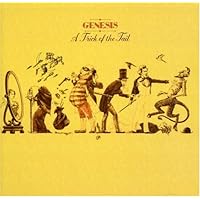
An event recently took place that many of us have been waiting (sleeplessly) for ever since 1994: The entire Genesis catalog is in the process of being remastered, and the charge has been taken up by none other than the masters of remastering, Rhino Records! When I heard this, I was absolutely floored. After all, it has been now 13 years since the Genesis albums have been touched, and while Yes, King Crimson, Jethro Tull, and even Kansas have been available in remastered editions since the turn of the millennium, Genesis has been completely overlooked...until now.
Unfortunately, it's not all rosy and peachy. Unlike some reissues, yes, you definitely will notice the difference between the new and old versions. And that's the problem. By no means were the 1994 Genesis remasters perfect; in fact, some of them are downright pitiful. 'A Trick of the Tail' was one of the better ones, though there were several glaring problems that needed to be solved with the sound. Incidentally, these have been totally fixed in the 2007 reissue. But, alas, it's the other changes that complicate the matter.
Below is an itemized list of what's right with this remaster, and what's wrong with it:What's RIGHT with 'A Trick of the Tail' (1976/r. 2007):
1) Hey! I get it now! - Throughout the album, the vocals are much clearer. Passages that seemed muffled and unfocused are now much easier to understand, even without the aid of already knowing the lyrics. This was a weakness of Phil Collins's vocals all the way up to the 1980 'Duke' release, and I'm glad to say Rhino did a great job maximizing what they had to work with. Listen to "Squonk," for instance, and you can actually follow the tale perfectly.
2) Cutting through the mix - If there was one thing that was lacking in the 1994 issue of the album, it was that the overall sound was very crowded. The 2007 reissue fixes this, though at the expense of a loss of some of the overall feel of the album (see the next section). Vocals are separated from the instrumentation better than ever before, and the guitars in particular are heard loud and clear (again, see below). Complex mixes of instrumental textures are resolved much more nicely than in the 1994 issue.
3) It doesn't hurt anymore - There were some particularly grating siblants ("esss" sounds) in the 1994 reissue, most noticeable in "Mad Man Moon." These have been handily dealt with in the Rhino remaster.
4) Backing him up - The background vocals are more spacious and clear than ever before, and solo and ensemble vocal selections contrast very nicely now. This is best heard, again, in "Mad Man Moon."What's WRONG with this reissue:
1) Where are the bloody keyboards?! - Steve Hackett is a great guitarist. Please don't misunderstand me. But I really don't want to hear *every single note he ever strummed in his life* blasting away with all the subtlety of a jackhammer. Especially when it means that the keyboard parts, particularly the Mellotron, are completely drowned out. For instance, listen to the hypnotic ending section of "Entangled." Most of its charm is from that dark, haunting keyboard solo that proceeds to the end of the piece, backed by deep bass notes and a wash of heavily-processed Mellotron chorus. Many of you were probably not even aware that Hackett does strum a few notes here and there at the end, but if you listen to the 2007 remaster, it is utterly impossible to miss it. Of course, something had to give, and that is the Mellotron chorus, which is so muted that until the very end of the song you probably wouldn't even know it was there. This sort of thing happens all over in these reissues (it's much worse in the following album, 1977's 'Wind & Wuthering'), and it's a jarring and, in my opinion, detrimental alteration to the sonic character of the album.
Say what you will about my comments here; I really don't care. As I said, Hackett was a great guitarist, and Genesis really fell apart as a progressive act when he left. But the music just sounds wrong with his work showcased in the manner of the 2007 remaster. Your miles will vary, and the degree to which the keyboards are muted varies across the album as well, but for me, I say this was a real mistake that undermines the musical cohesion expressed by the band during this time.
2) If I wanted to hear a live performance... - On several of the songs, most notably "Dance On A Volcano" and "Squonk," there is a copious amount of echoing, stadium-style delay applied to the vocals and guitars. Along with the way the drums were EQ'ed throughout the album (a lot of bottom and top end, with the midranges muted), these songs especially sound like the engineers were trying to make them sound live. This just won't do. Apart from being inconsistent with the remainder of the album, the "live" ambiance just doesn't suit this music.
3) It ain't the 80s, guys - Throughout the album, it seems as though the engineers were trying to bring the overall sonic character more in line with the 80s Collins-era albums. As a result, something very special about the pair of albums released in 1976--'Trick' and 'Wind'--is utterly lost. This effect is much more apparent in the 2007 remaster of 'Wind' than on 'Trick,' but it can be heard in "Squonk" and "Dance On A Volcano" in particular. There was a very particular sound about 'A Trick of the Tail,' a more intimate, analog cast, that is pulverized by the cold edge of 80s-style digitization. Again, this is down to personal preference, but I think the 1994 release really captured the warm, analog tone of this album much better.Overall, this Rhino version of 'A Trick of the Tail' sounds *very* different from the 1994 release. Some of the changes were welcome, but more of them (at least in my opinion) were wholly unwelcome. Many if not all the major issues with the 1994 release were fixed, but the new version has many new issues of its own. I can't help but feel that Rhino really dropped the ball here, and I am really disappointed with this work. It looks as though we're going to have to wait another decade or so before somebody comes along and gets it right. The thing that dismays me, though, is that I always had faith in Rhino. I guess I was just proved wrong.
Like I said, opinions will vary widely. My suggestion to prospective buyers is to buy both versions (1994 and 2007) of any one of the classic output of Collins-era Genesis, choose which one you think sounds better, and then complete the set from that version. I will get a lot of hateful comments ("How dare you insult Steve Hackett!"), but my opinion will not change. I have made a compromise with this review by rating the 2007 remasters the same way I have rated the 1994 ones (the ratings are based on the album content), but I have included my exclusive comments on the 2007 reissue quality. My purpose is to serve as an adviser to any who are considering purchasing this edition, either as an upgrade or as your first copy. Whichever version sounds better to you is ultimately your decision, and I wish you all the best with it. Rhino just didn't do it for me here.
Better luck next time.

Click Here to see more reviews about: Trick of the Tail (CD/DVD)

No Description AvailableNo Track Information AvailableMedia Type: CDArtist: GENESISTitle: TRICK OF THE TAILStreet Release Date: 05/15/2007

Buy Now

Click here for more information about Trick of the Tail (CD/DVD)