Showing posts with label art rock. Show all posts

Pictures at an Exhibition Review

Pictures at an Exhibition
Average Reviews:

(More customer reviews)
The positive:
This performance is good but not as good as the Emerson Lake and Palmer: Masters From The Vaults DVD. The video and remix of the sound are very much improved over my Japaneese import laserdisc of the same concert. This a young ELP still in their prime.
The not so positive:
There are some unfortunate things about this video. The special effects are annoying to the point of being nauseating. The overly "creative" post production crew really got carried away with the psychedelic tint & color saturation effects. This may have been interesting as a DVD special feature, (I might have even thought it was great 30 years ago), but these days I'd just like to see the performers without these effects. I wonder if the unaffected video source even exists anymore.
Yes, the performance is over the top. But so is about every live rock performance from that era. Just look at the recently released Zeppelin DVD. But hey, the era was what it was. I'm just glad that some of these bands were captured live while they still had some fire in their bellies.
The unfortunate:
My laserdisc of this concert includes full performances of Barbarian, Take A Pebble, and Knife Edge along with Pictures At An Exhibition. It's really, unfortunate that they chose not to include the entire concert in this DVD! They should re-release this without the special effects (except for maybe in the special features section) and included the omitted songs.

Click Here to see more reviews about: Pictures at an Exhibition

Japanese limited reissue of the 1972 album has been fully remastered and features the original 12 tracks packaged in a miniature LP sleeve. Victor. 2005.--This text refers to an alternate Audio CD edition.

Buy Now

Click here for more information about Pictures at an Exhibition

Tales From Topographic Oceans Review

Tales From Topographic Oceans
Average Reviews:

(More customer reviews)
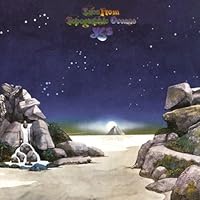
I reviewed the original version of "Tales from Topographic Oceans" back in October 2002. More recently I purchased this expanded two CD version from Rhino that includes not only the original four tracks, but a studio run-through of "Dance of the Dawn" and "Giants Under the Sun." Jon Anderson's vocals sound a bit thready and weak in the studio run-through, and the harmonies have yet to be added, yet, there is a certain charm to these run-throughs and the music is powerful.
"Tales" is a deeply philosophical album that is not for the meditative faint of heart. While much music is created to be toe-tapping and easy to sing to, "Tales" is in that genre usually called progressive rock, in a sub-genre that requires intense analysis to understand. The result is an album that is inaccessible and incomprehensible to a casual listener. In order to understand this music you must read the lyrics and listen, and listen, and then listen some more. Even then you might fail to gain a glimmer of Yes' intent.
"Tales from Topographic Oceans" would have to qualify as one of the most if not the most deeply complicated rock music ever created. Again, if you are a casual listener the complexity of the music can be frustrating or boring. However, if you consider that classical music is often complex, and to be understood requires extended focused listening, it should be of little surprise that Yes took that complexity for its own in the development of this music, creating a symphony in four movements.
The first movement is titled "The Revealing Science of God: Dance of the Dawn". The lyrics have no meaning, and they also have meaning. Confusing? Oh yeah. Understand that the point of the movement is to get the listener to realize that there are bits and pieces of knowledge, and understanding is something that rarely, if ever, comes all at once. Jon Anderson uses the sound of the words to create an almost subliminal meaning. The whole point is that you are to realize that we do not understand, but we have to keep trying to understand. Also, when you find meaning, know that you found it within yourself.
The second movement is "The Remembering: High the Memory". This song is about the breadth of knowledge that is available to humankind and to any one individual. However, the song is also trying to say that while that knowledge is available, each of us can only access that knowledge when it becomes a part of our personal knowledge, and more than just having it as personal knowledge, it must be accessible and understood to be useful. Another way of saying this is that we have realms of knowledge that are potentially available to each of us. However, only that knowledge which we personally understand and can access will be of any value to us.
The third movement is "The Ancient: Giants under the Sun". The concept of this song is relatively simple compared to the first two movements. This song pushes through the envelope of recorded time to access forgotten knowledge from civilizations that came before. While the song is relatively easy to understand, the music is more interwoven and complex, and intertwines elements that are intended to evoke those earlier cultures. Therefore, the instruments flavor this movement with musical elements from around the globe to help give the feeling that the song of our knowledge is made up of many parts from many people. While the music sounds relatively simple, it is as technically detailed and complex as any concerto or symphony I can recall. While Steve Howe's guitar may be pivotal in this song according to Jon Anderson, Rick Wakeman's keyboards are essential to the ethnicity of the various portions of the music. This track is an incredible composition. This movement adds to the seeking of the first movement and the understanding of the second movement that there is knowledge yet available to be discovered from all cultures and civilizations that may no longer exist, but that understanding is still available if we know where and how to look for it.
The fourth and final movement is "Ritual: Nous Sommes Du Soleil". This composition is relatively accessible philosophically because it is a description of the human condition. This piece is intended to communicate that we have the ability to seek knowledge and understanding. Part of that knowledge and understanding is the constant struggle between good and evil, and how that struggle plays a part of how we view that knowledge. However, this piece also reinforces the earlier movements in that we have the ability learn and to understand granted by a higher power.
I've read that Rick Wakeman complained that there was too much filler in this composition. I suppose that could be said of many of the classical compositions by Beethoven, Tchaikovsky, Bach, and on and on. However, I've also read that Steve Howe thought that this was some of his best work ever. This work is magnificent in conception and scope. It is not readily accessible to the casual listener. The very best way to understand this music is to get a bottle of really good wine, sit in the middle of the room in a recliner, turn out most or all of the lights, and listen and feel. Start by paying attention to the emotion and feeling of the words, because that was the intent of the lyrics. Once you begin to understand what was intended, then this work becomes accessible. It is one of the most incredibly complex pieces of music I've ever heard, and I have listened to everything from classical to death metal. This music isn't for everyone, but those who can get into it, it is fantastic.

Click Here to see more reviews about: Tales From Topographic Oceans

Full title - Tales From The Topographic Oceans. 2003remastered, reissue of 1973 album with redesigned booklet(digipak/slipcase), restored LP art, archival photos andnew liner notes. Includes 2 bonus tracks 'Dance Of TheDawn' (studio run through) & 'Giants Under The Sun' (studio run through). Elektra.

Buy Now

Click here for more information about Tales From Topographic Oceans

Grand Illusion Review

Grand Illusion
Average Reviews:

(More customer reviews)
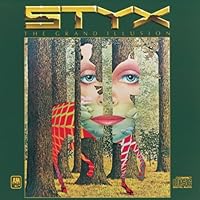
I did not own a single Styx album until recently - which is odd because the group was highly popular during the late 1970s/early 1980s when I was a teen (all 80s teens liked Styx right?). My suspicion is that it may have had something to do with the fact that I was a Yes and Pink Floyd freak at the time and was unyieldingly provincial in my listening habits, although it may have been a subconscious observance of what I refer to as the "Styx stigma". For whatever reason, I am sorry I waited this long because The Grand Illusion (1977) rocks like nobody's business and Styx is a darn good band. As a huge fan of progressive rock (I am still a raving Yes-head), the whole package appeals to me on many levels: soaring three and four part vocal harmonies by excellent high tenors; super Hammond organ work; blazing Rick Wakeman-esque Moog (synth) solos; great synthesizer tones; dynamic acoustic/hard rock contrasts; agile ensemble work (all of the musicians are very good); and to top it all off, wonderful harmonic and melodic development. Mix in the heavily distorted guitar of Led Zeppelin along with the thunderous and tight rhythm section of Deep Purple and the blueprint for The Grand Illusion is pretty much drawn out. Although superficially similar, this album is light-years ahead of previous works such as Equinox (1975) and Crystal Ball (1976). In spite of the fact that those albums are very good (and recommended) they do not exhibit the compositional sophistication of The Grand Illusion. This is wonderful and crisply produced progressive hard rock and certainly provides me with a great deal of enjoyment - after all isn't that what rock is all about? All in all, this is an engaging and superb album, a heck of a lot of fun to listen to, and is highly recommended along with Pieces of Eight (1978). For those new Styx fans (like me) that enjoy this band and want to explore other progressive hard rock bands, the album Point of Know Return (Kansas, 1977) might also prove enjoyable.

Click Here to see more reviews about: Grand Illusion

Japanese-only SHM-CD (Super High Material CD) paper sleeve pressing of this album.SHM-CDs can be played on any audio player and delivers unbelievably high-quality sound. You won't believe it's the same CD! Universal. 2009.--This text refers to an alternate Audio CD edition.

Buy Now

Click here for more information about Grand Illusion

Momentary Lapse of Reason Review

Momentary Lapse of Reason
Average Reviews:

(More customer reviews)
Pink Floyd's triumphant comeback (their 13th studio album) entitled A Momentary Lapse of Reason was released in September of 1987.
The album was the first without original member bass player/singer/lyricist Roger Waters whom acrimoniously split from his bandmates in 1985.
For years, many thought that 1983's aptly named The Final Cut was the farewell album of Pink Floyd's but singer/songwriter/guitarist David Gilmour, drummer Nick Mason (although he plays on half of the disc because his playing was underestimated by Waters and wasn't until the Momentary Lapse tour where he played better again) and the late great keyboard player Rick Wright (as a salaried musician nonetheless) along with co-producer Bob Ezrin and session bass player Tony Levin spent eight months recording the album at David's houseboat studio the Astoria in London and at various studios in London and L.A. (where they relocated after Roger's lawyers threatened legal action) with many people doubting the Floyd being relevant without Waters.
However, when I (as an 11 year old boy in 1987) first heard the first single "Learning to Fly", I was in reassured that Floyd was back in a big way. When my father brought home the album for me shortly after its release, I was amazed on how superb this album was.
It was in fact David Gilmour whom sang most of the classics from 1969 to 1975 before Waters went on his ego trip for the next three discs (no disrespect to those last three albums (the underrated Animals, the epic The Wall and the somewhat bleak The Final Cut), I like all of Floyd's work and am an unbiased die-hard fan). The songwriting burden nestled now on David's shoulders (he wrote all of the music and gave credit to those who came up with small ideas but he isn't confident in writing lyrics hence other people help with the lyrics).
The instrumental opening "Signs of Life" dated back to a riff that first emerged in the Animals era and a great instrumental. The aforementioned "Learning to Fly" follows and was a great song. The ominous "The Dogs of War" is next and featured one of David's best guitar solos and Carmine Appice was on drums on this track. We then segue into "One Slip" which is another great song and was co-written by Gilmour with Roxy Music guitarist Phil Manzanera and is where the album got its title. The poverty and injustice anthem "On the Turning Away" is one of Floyd's best songs and was another rock radio smash upon release.
"Yet Another Movie" and "Round and Around" kicked off the album's second half and reminded me musically of Wish You Were Here era Floyd and is killer. The "A New Machine (pt.1)"/"Terminal Frost"/"A New Machine (pt.2)" medley though they are separate tracks are spellbinding. The best track on the album was the closing "Sorrow" which goes back to the old epics of the past clocking in at close to 9 minutes.
The Momentary Lapse album was well received when release as it hit #3 on the album charts in the US and #1 on the CD charts here in the US. Also, the album sold over 5 million in the US alone to date and proved that the Floyd could survive without Waters. Also, the band embarked on a tour that would go on for three years and be documented on the album/video Delicate Sound of Thunder.
In 1997, the album was re-mastered and re-released. Then it was re-released again in October of 2005 with a new remaster thanks to James Guthrie and Joel Plante who remastered this album and it sounds better than either the 1987 or 1997 CD issues. Now in 2009, Capitol Records acquire the licensing rights to this album and just re-released the CD with its 1997 remaster and booklet.
Highly recommended!

Click Here to see more reviews about: Momentary Lapse of Reason

Reissue of this 1987 album from the Rock legends. This 1997 remastered version, available now through EMI, was theband's first release after the departure of Roger Waters and features David Gilmour along with Floyd members Nick Mason and Richard Wright. Also features musical assistance from Tony Levin, CarmineAppice and Jim Keltner.

Buy Now

Click here for more information about Momentary Lapse of Reason

Final Conversation of Kings (Tour Edition) Review

Final Conversation of Kings (Tour Edition)
Average Reviews:

(More customer reviews)
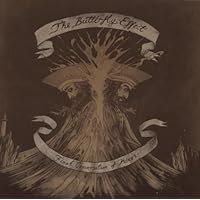
Fantastic Album. Very melodic themes and elaborate instrumental work. I appreciated quick delivery, too.

Click Here to see more reviews about: Final Conversation of Kings (Tour Edition)

2008 album from the Australian band. The Butterfly Effect have experienced a lot in the past two years. Their sophomore album Imago attained the #2 position on the Aria charts and achieved gold status. They have received much critical and popular acclaim both locally and internationally for their epic soundscapes and incendiary live shows. In May, they embraced self-imposed solitude in the sanctuary of NSW's Grove Studios with producer Forrester Savell (Karnivool, Full Scale) to record what has become their third album, The Final Conversation Of Kings.--This text refers to an alternate Audio CD edition.

Buy Now

Click here for more information about Final Conversation of Kings (Tour Edition)